The Leader’s Compass - Newsletter (You Don’t Have to Have All the Answers)


You can lead with confidence while still having something to learn.
Someone on your team asks a question, and you feel the pressure to answer immediately.
Maybe they want to know how to handle a frustrated customer. Maybe two assignments are competing for the same deadline. Maybe they question a decision you didn’t make and can’t fully explain.
You pause. You’re not sure what to say.
Then comes the thought: I’m the leader. I should know this.
Taking responsibility for other people’s work can make every question feel like a test of whether you deserve the role. You may find yourself answering too quickly, defending a decision you don’t understand, or avoiding questions that expose what you still need to learn.
You can be a capable leader and still have questions. Your responsibility is to help your team move forward with sound decisions, clear expectations, and reliable follow-through.
That sometimes begins with saying, “I don’t know yet.”
Be honest, then take responsibility
There is a difference between admitting uncertainty and leaving your team without direction.
Consider this hypothetical situation: A team member asks whether they can promise a customer an earlier delivery date. You don’t know whether the team has enough capacity.
A rushed “yes” could create a commitment others cannot meet. A vague “I’m not sure” leaves the employee stuck.
A more useful response might be:
“I don’t know whether we can meet that date. I’ll check with the people doing the work and get back to you by two this afternoon. Until then, please keep the original commitment.”
You have acknowledged what you don’t know, protected the team from an unsupported promise, and explained what happens next.
The follow-through matters. If you promise an answer by two, return by two, even if your update is that you need more time.
Make room for what your team knows
Your position gives you responsibility. It doesn’t give you everyone else’s experience.
The person working directly with a customer may understand a recurring problem you haven’t seen. Someone using a process every day may know exactly where it breaks down. A quieter team member may have a useful suggestion but hesitate to interrupt.
Listening gives you better information. It also shows respect for the people doing the work.
Before offering your answer, try asking:
- “What are you seeing that I might be missing?”
- “What have you already tried?”
- “What do you recommend, and why?”
Give people time to answer. If you immediately replace their suggestion with your own, they may learn that you weren’t really asking.
You can listen carefully and still decide on a different course. When you do, explain your reasoning and acknowledge what their contribution helped you understand.
Know when it is time to decide
You won’t always have enough time to gather every detail. Some decisions must be made with incomplete information.
When that happens, be clear about what you know, what remains uncertain, and what you are asking people to do.
You might say:
“Based on what we know today, this is the direction we’ll take. We’ll review it Friday after we see the results. Please bring any problems to me before then.”
Humility helps you remain willing to learn. Accountability requires you to make the decision that belongs to you.
Both are part of serving your team well.
Your leadership practice this week
Ask your team, together or individually:
“What is one thing I need to understand better to help you succeed?”
Listen without explaining away the answer. Ask a follow-up question so you understand the specific difficulty. Then choose one useful action you can take and tell them when you will follow up.
You may hear about an unclear priority, a slow approval process, or something you are doing that makes their work harder.
Some answers may be uncomfortable. Give yourself time to consider them honestly. You don’t have to promise every requested change, but you can make sure people know you heard them.
A question to carry with you
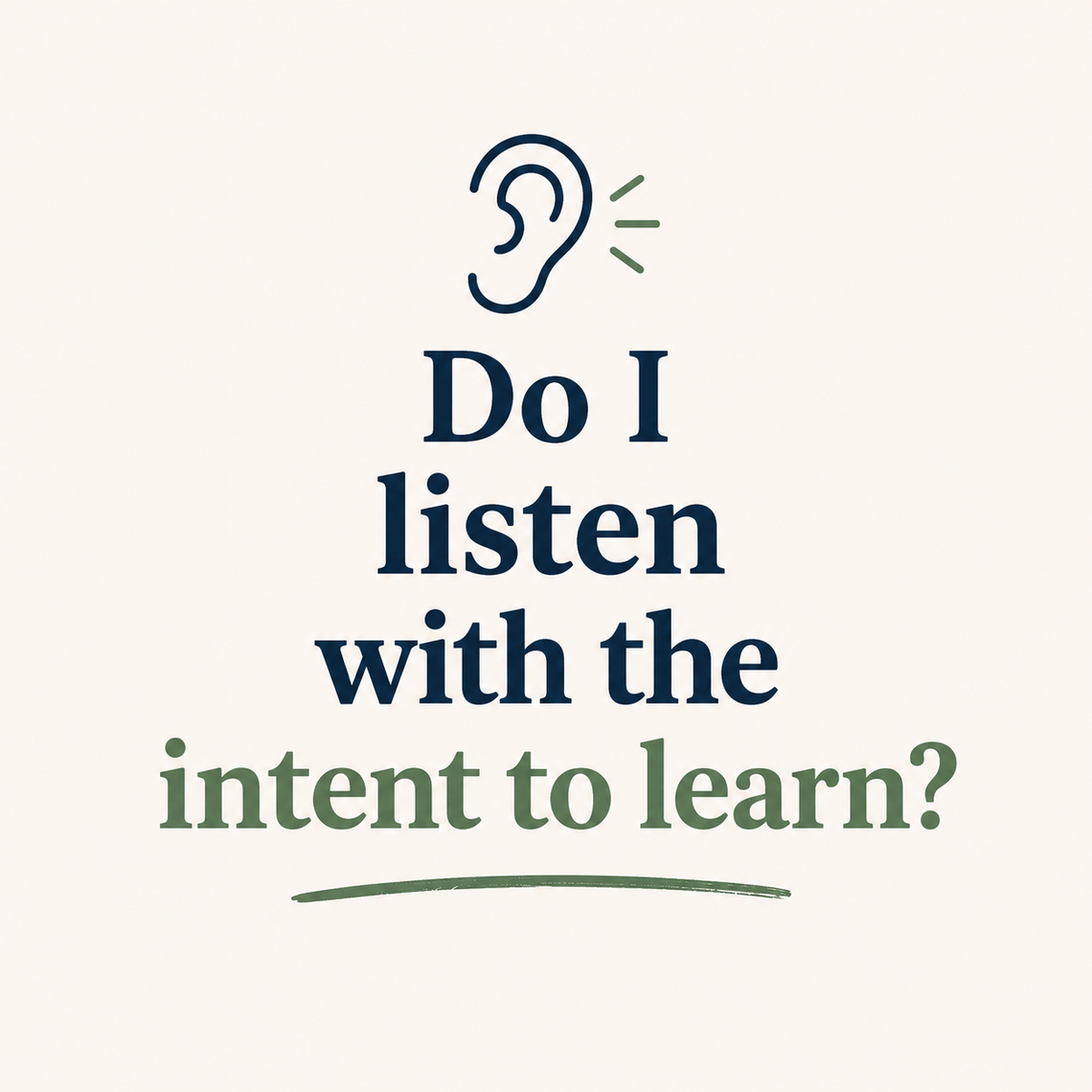
Where am I feeling pressure to appear certain when I would serve my team better by asking a question?
You don’t need to prove that you have finished learning. You need to keep learning while taking care of the responsibilities entrusted to you.
This week, start with one honest question. Listen carefully. Follow through.
What is one leadership question you’re struggling to answer right now? Hit reply and share it. Your question will help as I seek to increase my value to you in future content.
Keep learning. Keep serving.
Aaron
Leader Navigation
Subscribe to my newsletter
Subscribe for tools, useful principles, and learning activities to help you build trust, communicate clearly, and lead your team with confidence.