Everybody Matters Book Review for New Leaders

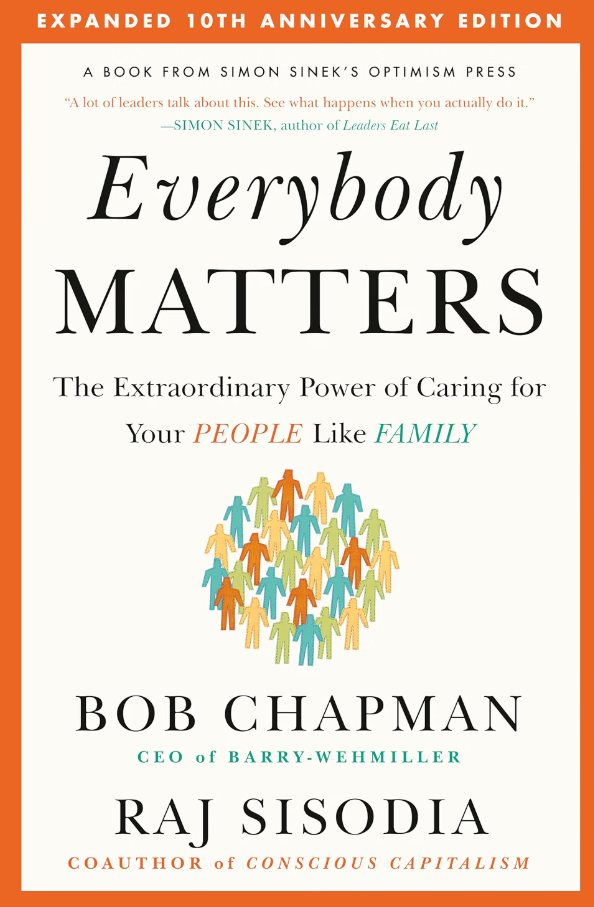
Bob Chapman and Raj Sisodia’s Everybody Matters asks leaders to consider how their decisions affect the people doing the work. Here’s what the book gets right, where it has limits, and how new managers can apply it.
You’re a few weeks into your first leadership role when someone misses a deadline. You still have your own work to finish, another team is waiting, and taking over would be faster than talking it through. You can get the work done today. If the same problem comes up next week, what will your team have learned about bringing it to you?
That moment captures why Everybody Matters: The Extraordinary Power of Caring for Your People Like Family belongs on a new leader’s reading list. Bob Chapman and Raj Sisodia ask you to consider what your decisions do for the people who carry them out. In a missed-deadline conversation, that means finding out what happened, explaining who was affected, and agreeing on what needs to change. You can do all three in the same conversation.
What the book is about
Chapman and Sisodia tell the story of Barry-Wehmiller, an industrial company that used its day-to-day decisions to put a different idea of leadership into practice. Chapman calls it Truly Human Leadership. Its central idea is that leaders should judge their decisions by how those decisions affect the people doing the work as well as by what they achieve for the business.
The authors use Barry-Wehmiller’s experience to show what this looks like in listening, recognition, and decisions about the business. First published in 2015, the book was revised and expanded in 2025 with five new chapters. Read about the book from the publisher.
What the book does well
The strongest examples put the authors’ beliefs under pressure. During the Great Recession, Barry-Wehmiller used temporary unpaid furloughs to avoid layoffs. Losing pay was a real hardship. Chapman reported that some employees offered to take additional time off so coworkers who could less afford the lost income could take less. Read Chapman’s account of the furlough decision.
The decision raises a question you can use even when you have very little authority over policy. Who will carry the cost of this decision, and have I heard from them? Say your team needs evening coverage for a rush project. Before asking the same dependable person to stay late again, look at who has already covered, what can wait, and how the team can share the extra work. A decision that looks efficient on a schedule may look different once you see who keeps absorbing the disruption.
Where the book has limits
The authors draw heavily on Barry-Wehmiller’s experience. That gives the book a concrete story and leaves you with some work to do as a reader. A chief executive can change policies, commit resources, and ask an entire company to respond differently. A first-time supervisor usually has a smaller set of decisions to make. The examples show what one company tried and how its leaders understood the results. Readers will need to judge which practices fit their teams.
The subtitle’s family comparison deserves some care, too. A manager can take a genuine interest in someone’s well-being and respect their privacy, time outside work, and choice about what to share. If someone needs to leave on time, you can work with them on coverage without asking them to justify their personal commitments. That kind of respect gives the book’s message a practical meaning at work.
Three ways new leaders can put it to work
1. Listen long enough to learn what you missed
Barry-Wehmiller made listening a foundational course in its internal leadership training. That emphasis is worth carrying into your next one-on-one. Ask a question about the work, give the person time to answer, and check what you heard before you offer a solution. See how Barry-Wehmiller teaches listening.
Try asking, “What part of your work has been harder than it needs to be lately?” If the person describes a slow approval process, ask them to walk you through the last time it happened. You might discover that a decision you thought you delegated still requires your approval in practice. If you agree to clarify who can make that decision, say when you’ll do it and follow up by then.
2. Recognize a contribution people might overlook
You’ll probably hear about the person who gets a difficult project across the finish line. Look for the person who caught a mistake early, helped a new teammate, or made a handoff easier. Tell them what you saw and why it helped.
For example, “When you added the open questions to the handoff notes, the next shift knew where to start. They could pick up the work without calling you back in.” Specific appreciation helps someone see the value of work that can be easy to miss. Ask whether they prefer to hear it privately or in front of the team.
3. Give feedback that respects the person and clarifies the standard
Suppose a teammate misses a handoff twice and the next shift has to piece together what happened. Talk to them privately while the details are fresh. Here’s how you could open the conversation.
“On Tuesday and Thursday, the handoff notes were missing when the next shift started. They had to reconstruct the status before they could help customers. Can you walk me through what happened?”
After you’ve heard them out, agree on what comes next. For example, “Let’s have the notes in the shared log by 3:45. If something will keep you from finishing, message me before the handoff so we can make a plan. I’ll check in with you on Friday to see how it’s working.”
If two assignments routinely compete for the same time, you may need to change the work as well as clarify the expectation. This is where the book connects with servant leadership. You’re responsible for the standard, and you can help remove a barrier that makes it harder to meet.
Is Everybody Matters worth reading?
Yes, especially if you’re making the shift from doing the work yourself to helping others do it well. I’d recommend it to new managers who want to build trust early and to team leads who still carry a full workload of their own. The company stories give you a reason to pay closer attention to the effects of decisions you already make. For a more immediate guide to organizing your first few weeks, pair it with the first 30 days as a new manager checklist.
Start with your next one-on-one. Ask what is making someone’s work harder, listen until you can describe the problem in your own words, and agree on one next step you can follow through on. If the issue needs someone else’s decision, tell your teammate when you’ll bring it forward and when they’ll hear from you again.
Affiliate Disclaimer
As an Amazon Associate I earn from qualifying purchases.
Subscribe to my newsletter
Subscribe for tools, useful principles, and learning activities to help you build trust, communicate clearly, and lead your team with confidence.